
About the author.
Ailin Khassen is a final-year Media and Communications student with a strong interest in storytelling across art, film, and culture.
Her work focuses on capturing narratives that offer fresh perspectives and amplify underrepresented voices. Driven by a curiosity for diverse cultural subjects, she uses visual and written storytelling as a way to explore, question, and connect ideas across disciplines. The submitted work explores the surge of far-right parties across Europe, focusing on the role music plays in amplifying this momentum. As these movements increasingly co-opt Eurodance hits, a genre once synonymous with unity, resistance, and collective identity is being repurposed as a tool of political messaging — reshaping its cultural meaning to serve narratives of exclusion and division.
Social Media: @yoou.khs
Issue edited by Isabella Valencia Zapata
The politics of music: how the far-right is weaponising Eurodance hits
In recent years, the far-right has experienced a growing strength across Europe. This surge became particularly evident through a wave of election results in 2024 and 2025, which saw major victories for Marine Le Pen’s National Rally (RN) in France, Herbert Kickl's Freedom Party (FPÖ) in Austria, and Alice Weidel’s Alternative for Germany (AfD). While this trend is not entirely new, the last 12 months have highlighted just how widespread the support for far-right populist parties has become.
Not long ago, such outcomes would have seemed unthinkable. The European Union (EU) was formally established to safeguard peace and prevent a return to the devastation of World War II—with former wartime adversaries, France and Germany, at its heart. Yet today, the EU finds itself grappling with the rise of extremist parties that were once confined to the outer fringes of political life. As of 2025, seven EU member states—Croatia, the Czech Republic, Finland, Hungary, Italy, the Netherlands, and Slovakia—have far-right parties in government, indicating a dramatic shift in the region’s political landscape.
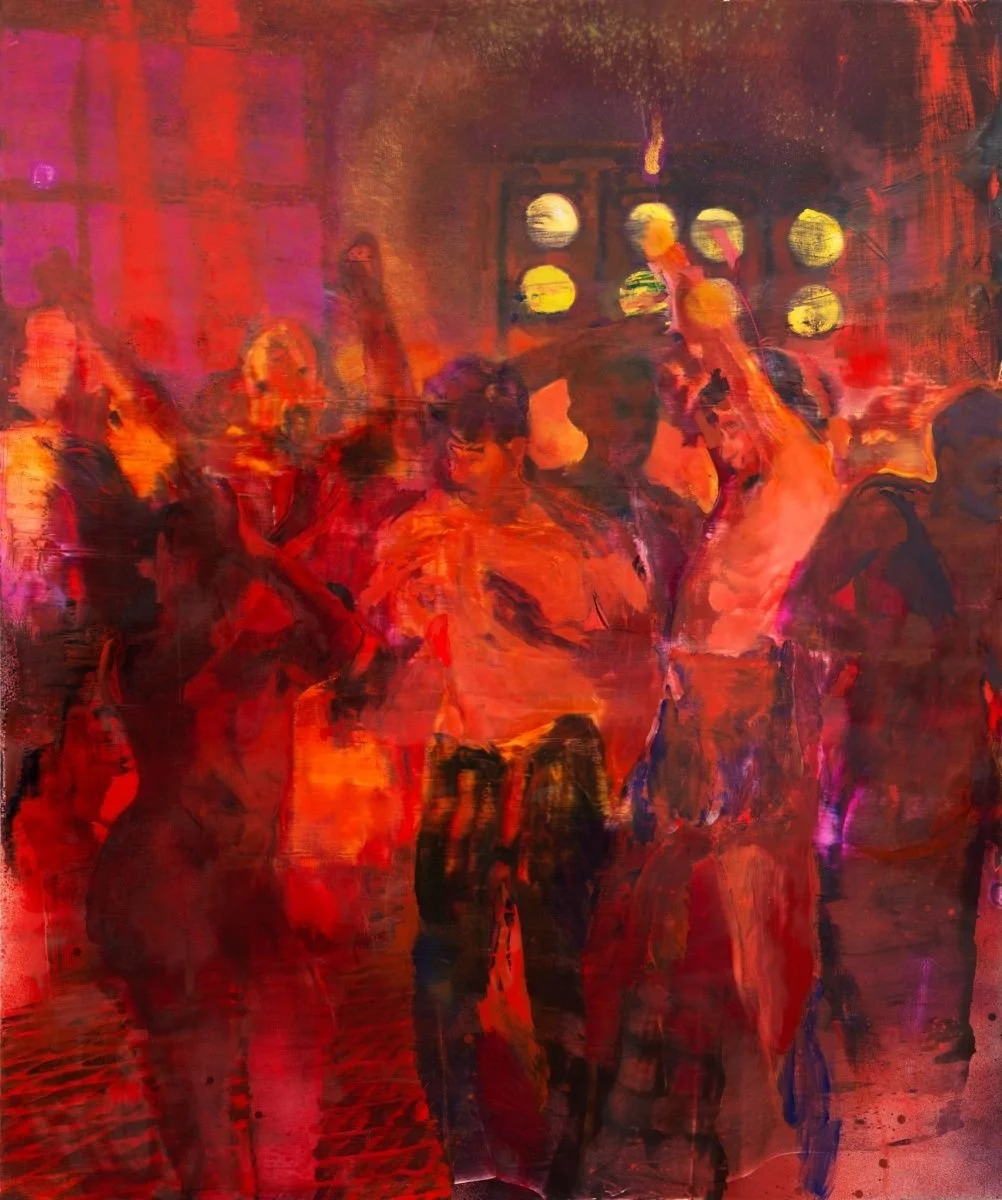
What is more surprising, however, is the role that music is playing in this momentum. A cultural medium often associated with unity, resistance, and collective identity is now being used to fuel division. From Paradisio’s 1997 hit “Bailando” to Gigi D'Agostino’s 1999 anthem “L’Amour Toujours,” Eurodance hits are increasingly being co-opted to amplify far-right ideologies. As i-D puts it: “By using music with an aura of innocence and positivity, the far-right constructs a new kind of Trojan horse.”
Inside Europe’s growing far-right movement
The far right’s success is underpinned by widespread anxieties over economic instability, immigration, and terrorism. In a post-pandemic Europe, rising unemployment rates and a growing sense of discontent have made extremist ideologies increasingly appealing to the general public. Reflecting this shift, the Patriots for Europe (PfE)—a parliamentary group that promotes nationalist, populist, and eurosceptic policies—has emerged as the third largest bloc in the European Parliament, holding 84 of its 720 seats. Close behind is the European Conservatives and Reformists (ECR), with 78 members, including Italian Prime Minister Giorgia Meloni.
In Italy’s 2022 parliamentary elections, Meloni’s Brothers of Italy (Fratelli d’Italia, FdI)—a far-right party with neo-fascist roots—secured more than 28% of the vote. Since then, the party has become one of the most electorally successful right-wing forces in Europe. Speaking with FdI Senator Raffaele Speranzon, the reason for their enduring success becomes apparent. “People are tired of feeling like strangers in their own country,” he says. “The appeal of the right is simple—we speak clearly, we defend Italian identity, and we don’t apologise for putting our citizens first.” For party members and supporters, Meloni represents a return to what they see as Italy’s core values. She places the preservation of traditional Italian identity at the centre of national policy, frequently repeating a fascist motto: “Dio, patria, famiglia”—also known in English as “God, fatherland, and family.”
The role of social media and music in amplifying far-right propaganda
The far right's growing appeal among voters is increasingly fuelled by algorithmic exposure, where emotion-driven content circulates rapidly and largely unchecked. Platforms like TikTok and YouTube have become central to the spread of a relatively recent movement known as “Save Europe”—an ideology rooted in the defence of European cultural identity. As i-D notes, the movement’s narratives frequently focus on immigration, globalisation, and perceived threats to what supporters describe as “traditional European values,” echoing the rhetoric of a growing wave of far-right political parties across the continent.
Music plays a central role in much of the far-right content circulating on social media today. Eurodance tracks, which originated in the European disco scene of the late 20th century, are frequently used in YouTube playlists and TikTok videos that pair nostalgic sounds with racist messaging. In one example, a user uploaded a series of videos titled “Top Best Save Europe Songs,” featuring heavily remixed tracks from across the globe. These videos have reached up to millions of views, with comment sections flooded by calls to “save Europe from immigrants” and encouragement to produce more of this content. The juxtaposition of this feel-good music and ultranationalist view delivers videos that appear apolitical at first glance, making them more shareable and less immediately recognisable as propaganda.
For Rakhima Yerken, a 22-year-old creative based in Paris, the shift was subtle at first. “I was shocked by the amount of far-right content I was seeing on social media,” she says, recalling the lead-up to the 2024 European Parliament elections. As this type of content began appearing more frequently on her TikTok feed, Yerken admits she initially failed to notice the shift in her algorithm. “By blending politics with internet culture—especially music remixes—far-right parties made nationalist and anti-immigration messages seem less obvious,” she explains.
From club classics to far-right chants
One of the most striking examples of Eurodance being weaponised by the European far-right involves techno anthem “L’Amour Toujours.” In the summer of 2024, a viral video emerged from Sylt—a resort island in northern Germany—showing a crowd gathered outside a bar during Oktoberfest, chanting “Foreigners out, Germany for the Germans!” Amid the chaos, one man appeared to give a Nazi salute, while others allegedly hurled racist abuse at a young Black woman before physically assaulting her. In response to the incident, organisers of Oktoberfest have removed the song from the festival’s playlist in an effort to discourage similar extremist displays.
Given this disturbing moment, it is important to note that music has long acted as a vehicle for channelling intense emotion across the political spectrum. James Martin, professor of political theory at Goldsmiths, University of London, says: “Contemporary music has a long history of being associated with individual rebellion and collective communion. It speaks to an expressive desire to distinguish oneself and feel intensely as an individual, without losing a sense of collectivity.”
Today, the far-right appears to have caught up with mass popular culture—just as it has with social media. At the heart of its digital strategy is an emotional imperative: trust your instincts, no matter how irrational they may seem. “Social media platforms are designed to reward immediate reactions, and the far-right has learned how to harness this dynamic,” Martin explains. “If you're angered by a YouTube rant, then trust it because it’s real. If you're moved by music and dance, then you're right to act on that feeling.” From a psychoanalytic perspective, he adds, the cultural command to enjoy without reflection—to feel deeply and act impulsively—is a defining feature of late capitalist societies. And it's precisely this impulse that the far right has begun to exploit.
How communities are resisting the far-right
Yet while the far-right grows bigger online and at the polls, grassroots resistance is also gaining momentum. Across the world, communities are coming together to push back against the growing influence of the far-right. From the Place de la République in Paris to the Brandenburg Gate in Berlin, tens of thousands of EU citizens continue to mobilise against fascism and ultranationalist narratives.
In France, this political urgency has sparked the creation of Front Electronique (FE), a cultural collective made up of more than 1,200 artists. Formed in direct response to the far-right’s increasing prominence, FE organises live debates, stages free concerts, and releases collaborative albums featuring a diverse range of contributors. Most recently, the group released “Siamo Tutti Antifascisti Vol.1” (“We Are All Anti-Fascists”), an album featuring 38 artists. It serves as a direct counter to the extremists who are co-opting dance music, functioning both as a cultural statement and a fundraiser for anti-fascist causes.
Speaking to The Guardian, Lucas Langlais—artistic director and member of FE—explains: “The electronic scene has always been a refuge for diversity, whether it be sexual orientation, ethnic origin, or individual beliefs. We believe that music and dance are powerful means to resist intolerance and celebrate freedom of expression.” As the far right continues to infiltrate digital spaces and cultural symbols, communities and collectives like FE are reclaiming those same platforms to promote inclusivity, solidarity, and resistance around the world.
By Ailin Khassen